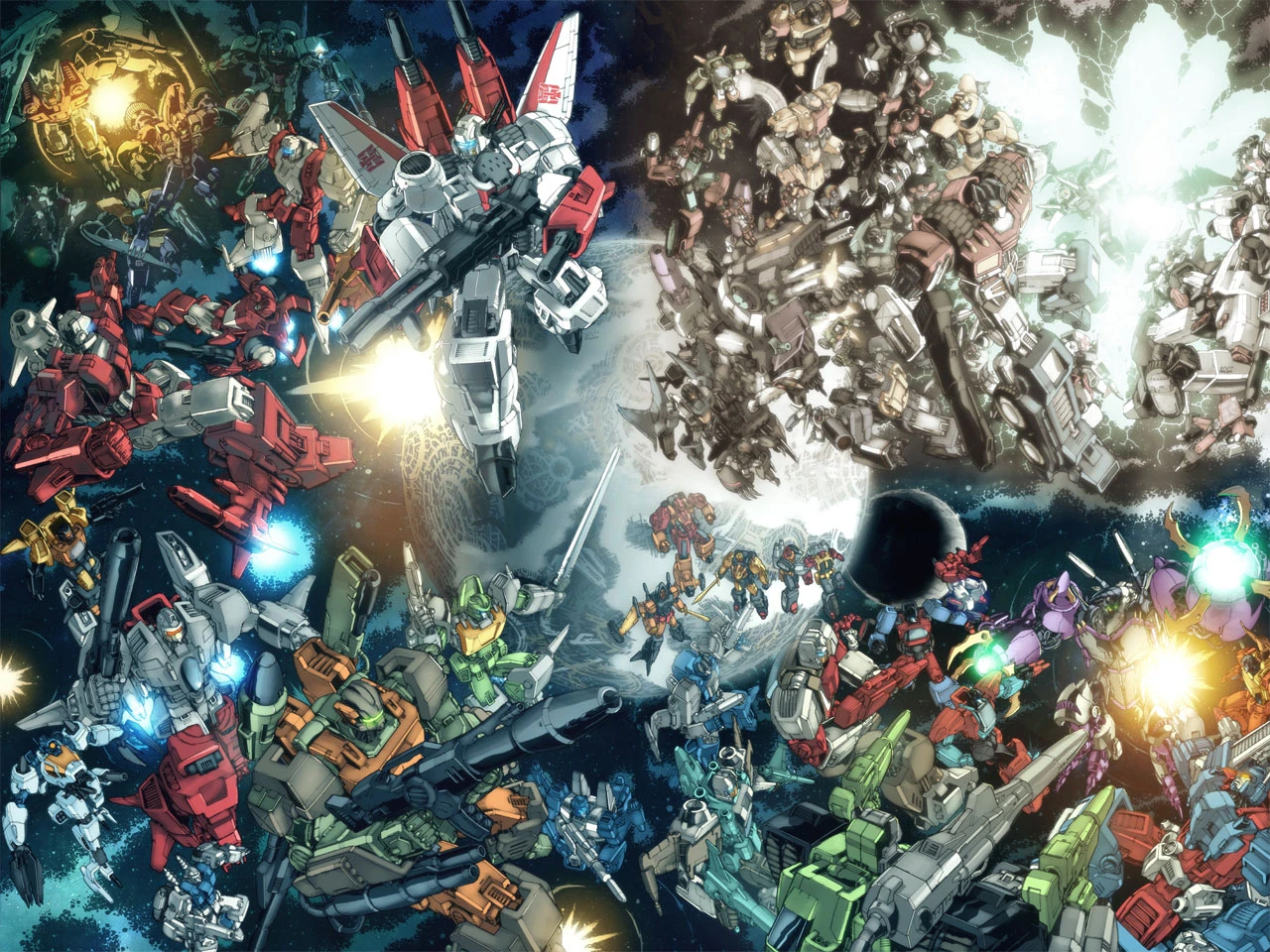

The Autobots wage their battle to destroy the evil forces of the Decepticons.
Transformers are a species of sentient alien robots from the multimedia/merchandising franchise of the same name. Hailing from the mechanical world of Cybertron, their name stems from their ability to alter their shape at will. They are capable of assuming all sorts of different forms, often changing into vehicles and other types of machinery. Some are even capable of transforming into animals.
The Transformers (or Cybertronians, as they refer to themselves) exist across many timelines and dimensions throughout a vast multiverse, each chronicling many lives and threads of history. Tragically, one constant throughout all of their divergent timelines seems to be war; the Cybertronian race, in every iteration, has at some point engaged in a centuries-long civil war that has not only ravaged their own species and planet, but spilled out into various other worlds, including Earth.
Origins
The precise origins of the Transformer race have differed throughout various mediums. Detailed below are some of the most outstanding origin stories of the species.
The Quintessons
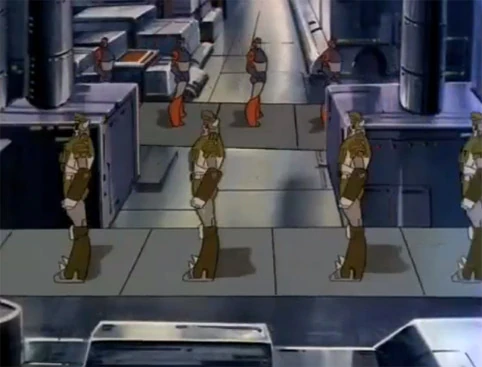

The Quintessons' assembly lines
In the original Transformers cartoon series, Cybertron and its inhabitants were built by another race of mechanical beings known as the Quintessons. Millions of years in the past, Cybertron was little more than a planet-sized factory that the Quintessons used to manufacture different lines of robots for consumer and military use. Over time, as the Quintessons' products became more advanced, they would develop sentience and eventually rebel against their makers. The success of the robots' rebellion was largely due to the development of the art of transformation, in which the robots would assume different forms with which to confound the Quintessons. These ranged from transforming into fast vehicles to escape from pursuers, mimicking other machines to hide and to infiltrate enemy strongholds and advanced weapons systems with which to fight back directly.
After driving the Quintessons off-planet, the Cybertronian robots would come to establish their own society and would flourish for a time. However, tensions would build up between the military and labour robots, eventually erupting into the First Cybertronian War. Details on this conflict are scarce, but by the end of it, Cybertron would enter its Golden Age.
Primus
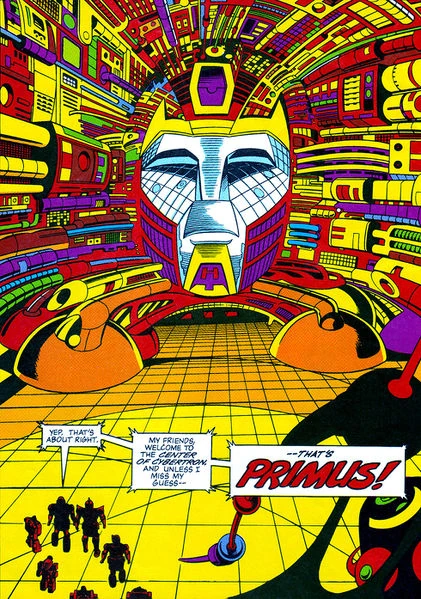

In many continuities, Cybertron and its inhabitants were brought into being by the divine entity known as Primus. At the dawn of time, Primus emerged from the astral plane, his essence inhabiting a large metallic asteroid. Over the course of eons, he would mould and shape his asteroid body into the planet Cybertron, and upon his body he would spawn his children, the Transformers, who were to become his army as he continued his eternal battle against Unicron, his brother and opposite.
The Transformers comic series from Marvel Comics was the first medium to include the story of Primus, but this origin would later be adapted and enhanced upon by the Dreamwave Comics continuity, which in turn would be expanded in Transformers: The Ultimate Guide. According to the Ultimate Guide, Primus not only created a pantheon of Primes as the original Transformers, but could also assume a planet-sized robot mode like Unicron. It would be several years and many retcons before Hasbro decided on a full roster for the Thirteen, but along the way the Primus creation story would be incorporated into various mediums, such as the Unicron Trilogy which consisted of the series Transformers Armada, Transformers Energon and Transformers Cybertron.
The most definitive version of the Primus creation story comes from The Covenant of Primus, a book set in the Aligned continuity of the Transformers franchise. In this telling, the Primes were created to vanquish Unicron, but fell to internecine conflict among themselves soon after Unicron's defeat. The death of Solus Prime led to the creation of the Well of All Sparks, but several of the remaining members of the Thirteen combined their various artifacts to bring life to Cybertron and create the Cybertronian race. Most subsequent Transformers continuities have largely adhered to this sequence of events in some form or another, often changing details to suit the needs of the story but remaining broadly faithful to the broad strokes.
The AllSpark
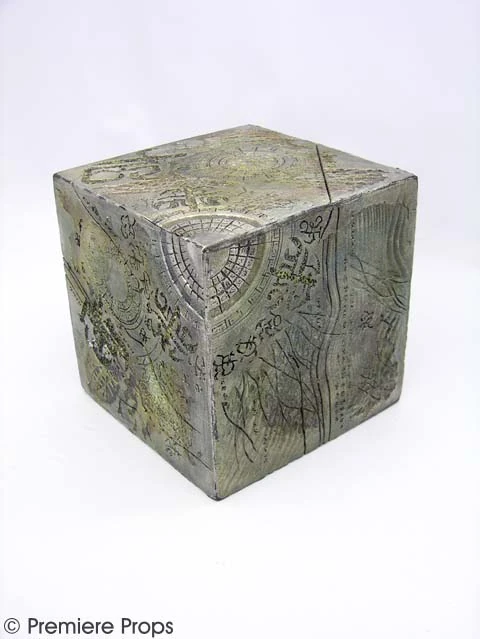

The AllSpark is a concept that was introduced in Michael Bay's live-action Transformers film series. It is a primordial relic of unknown origin and phenomenal power, capable of energizing metals and imbuing them with sparks. In the 2007 Transformers movie, the AllSpark was stated to be solely responsible for the creation of Cybertron and the beings that inhabit it. When loosed on Earth, AllSpark energy was capable of spontaneously imbuing human machinery with Transformer life, creating "AllSpark Mutations" from mundane vehicles or appliances.
As part of Hasbro's attempts to maintain brand synergy, the AllSpark made its first small-screen appearance the same year in the Transformers Animated cartoon; like the movie, the show treated the mysterious object as the sole creator of the Cybertronian species, and showed that individual fragments of the AllSpark displaying the power to bring new Transformers online from whatever inanimate objects happened to be in the vicinity.
The concept of the AllSpark was combined with the "Primus" origin story (above) as part of the unified lore created for the "Aligned" continuity family, establishing that it was the divine mechanism by which Primus created new sparks. This interpretation of the AllSpark as the tool through which Primus acts has persisted across most subsequent media. However, some post-"Aligned" works of fiction, most prominently the War for Cybertron trilogy, have used the AllSpark as a plot point without directly connecting it to Primus, so whether or not this relationship holds true in all modern continuities is a bit ambiguous.
Biology
Physiology
All Transformers possess a "robot mode" that allows them to move independently, manipulate objects, and otherwise interact with the world around them. Most robot-mode Cybertronians resemble humans—they possess a bilaterally symmetric body with two arms, two legs, a torso, and a head. However, these are guidelines rather than hard rules; Transformers may replace their hands (or even whole arms) with tools, claws or weapons. Some Transformers roll on wheels or caterpillar treads while in their robot modes; others float using jets or propellers. Others still may possess additional limbs.
A Transformer's head contains a number of sophisticated sensors and computers that allow a Transformer to gather and process information about their environment. These include optical sensors, olfactory sensors, audio sensors, and a brain module, the seat of their physical consciousness. Although some Transformers possess humanoid faces, many Cybertronians sport a single, wrap-around visor instead of two independent eyes. Others possess mouthplates, either over or sometimes in place of a mouth. Some characters, most notably Shockwave and Whirl, lack humanoid faces entirely, their heads little more than a single inset eye in a helmet.
While humanoid forms are the norm, they are certainly not the rule, and it is not at all uncommon for a Transformer to possess a primary mode based on an animal or vehicle. Many Mini-Cassettes—most famously Ravage, Laserbeak, and Buzzsaw—transform from cassette tapes into animals. For characters like Grand Slam and Raindance, their ambulatory vehicle modes are generally considered to be their "robot forms", which are at least capable of independent movement. Still other Transformers blur the lines—Robots in Disguise Steeljaw, for instance, transforms from a vehicle into an anthropomorphic wolf-man. Some Transformers possess completely inhuman forms that are not immediately recognizable as anything terrestrial.
Various Transformers continuities have recognized the existence of specific variations on baseline Transformer physiology, often with unique abilities that separate them from the rest of their kind. Some—such as the Headmasters, Pretenders, or Action Masters—are the product of deliberate body augmentation, and it is possible for any Cybertronian to join their ranks through an upgrade or a drastic full-body rebuild. Other Cybertronian subgroups, such as the Titans, Shifters, Mini-Cons, or Terrans, are closer to distinct subspecies, with their own unique physical adaptations and biological traits that distinguish them from the Cybertronian baseline.
Transformers are generally large in comparison to Earth lifeforms. The "average" Transformer ranges from about 15 to 40 feet in height, or somewhere around four times the height of an average man. However, Cybertronians exist in all shapes and sizes; many Cybertronians, including the Mini-Cons, Micromasters, Maximals, and Predacons, are approximately human-sized. Still others, such as the Real Gear Robots or the BotBots, are small enough to fit in a human's palm. On the other end of the scale, some Transformers dwarf their average-sized brethren: these include the towering inhabitants of Gigantion, the city-sized Titans, and planet-sized Transformers like Unicron and Primus.
Physical construction
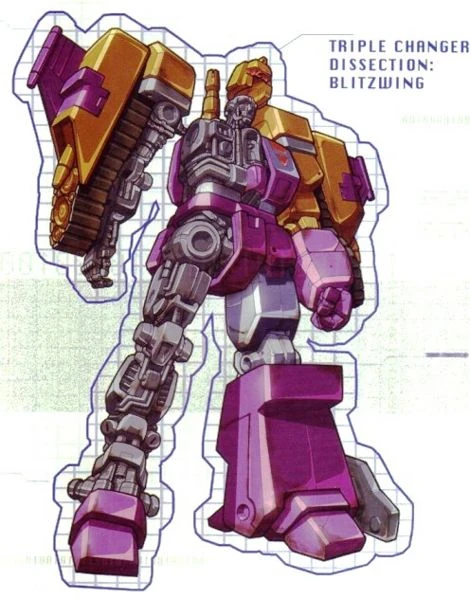

Transformers possess mechanical bodies made of gears, wires, cogs, and screws, but in many ways their inner workings more closely resemble that of a biological organism's. The earliest Transformers stories established that Transformers could feel pleasurable and painful sensations; their bodies were physically "alive". The Victory cartoon explained that the "living metal" of Cybertronians possessed a cellular structure. Most Cybertronian bodies are composed of this "technomatter", itself a unique alloy that incorporates Rarified Energon. Most Cybertronians possess nanomachine-based self-repair systems that allow them to slowly heal minor damage over time, and an "immune system" that defends their inner workings from pathogens. For more serious injuries, Transformers can be repaired using mundane materials; over time, their systems slowly break down these replacement parts, incorporate them into their systems, and rebuild them into living metal. Seriously damaged Transformers may enter "stasis lock", a protective low-power state that redirects all available power into maintaining a Transformer's most critical functions.
In addition to independently reiterating the idea that Transformers possess cells, Marvel's Generation 2 comic books revealed that Transformers possessed genetic material, copied from progenitors to offspring during ancient reproduction rituals. Subsequent stories, including Fall of Cybertron and More than Meets the Eye, have established that this "genome"—sometimes referred to as "CNA", "source code", or "hard-coded design schematics"—dictates a Cybertronian's physical appearance and alternate mode; like biological organisms, Transformers can be genetically modified or cloned.
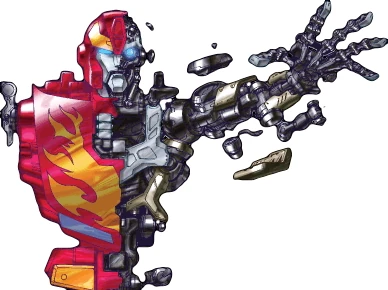

As robotic lifeforms, Transformers possess a number of interlinked, autonomous systems that handle various bodily functions. Some components—including fuel pumps, fuel lines, circuits, sensors, and processors, are more-or-less analogous to human technology and can be easily repaired or replaced with basic parts. Other key components, such as the transformation cog, the spark chamber, or the brain module, are entirely alien "biomechanisms" with no direct Earthly analogue; these parts are difficult to replace, and any operation usually requires the services of a trained surgeon with access to Cybertronian technology.
Cybertronians with the ability to transform usually wind up with parts of their alternate mode prominently visible while in robot form, sometimes known as a "secondary anatomy". While in robot mode, Transformers can often access parts of their alternate mode functionality—for instance, a Cybertronian who turns into a tank may still be able to fire shells in their robot mode.
As living creatures, Cybertronians are susceptible to exotic diseases and alien parasites, including Cosmic Rust, Red Rust, and scraplets. Transformers also share vulnerabilities with ordinary computers: with the right equipment, malicious actors can hack their minds and take control of their bodily functions, and their processors can be corrupted by shell programs or scrambled by electromagnetic radiation.
Transformers maintain an internal body temperature of 42 degrees Celsius.
Psychology
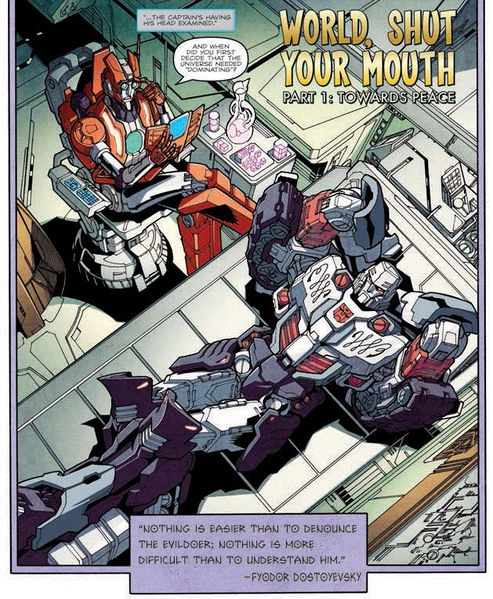

No two Cybertronians are entirely alike, and each Transformer possesses a unique personality that sets them apart from their fellows. In their natural state, each Cybertronian possesses a wide range of emotions analogous to the human spectrum—happiness, sadness, anger, fear—and a range of individual likes and dislikes. Like humans, Transformers may derive pleasure from socializing with others, take up hobbies, or express themselves creatively through art, music, or literature.
However, Transformers are also mechanical in nature. Their memories and personalities are stored on hardware, rather than the complicated tangle of neurons that constitutes the human brain. This means that, like a computer, a Transformer's memories can be copied, uploaded onto external data storage devices, or even deliberately erased. Although Transformers are durable, severe trauma to the Cybertronian neural structure—blunt impact trauma, sustained torture or electromagnetic radiation—can result in retrograde amnesia or severe brain damage that impedes a Transformer's ability to think, speak, and reason.
Like humans, Transformers store and compartmentalize the information they obtain about the world around them in their minds, although individual stories remain inconsistent about whether or not Transformers need to sleep in order to effectively consolidate and analyze these memories, as humans do when they dream. While Transformers, who frequently measure their age in millions of years, possess an impressively long memory, they do not possess infinite storage space. Although the Cybertronian brain can take vast amounts of data and compress it for later analysis, tiny fragmentation errors eventually corrupt these long-term memories, a phenomenon sometimes known as "information creep".
Individual Transformers have displayed conditions analogous to various human mental disorders: these include paranoia, depression, delusional thinking, obsessive-compulsivity, and even dissociative identity disorder. A small handful of Transformers, most prominently Geomotus, have been classified as neurodivergent. Other disorders are more specific to the quirks and cultural histories of the species: these include hangups such as mode attachment, Primus apotheosis, an addiction to the sensation of transformation, or conversely, a reflexive aversion to transformation.
However, because the endless wars of the Transformers leave little time for any kind of therapy, many of these conditions are left to fester untreated. A few stories have established that, in addition to conventional forms of psychoanalysis, Cybertronian medical disciplines such as cityspeaking and mnemosurgery allow individuals with the correct training to directly interface with a Cybertronian's mind with the assistance of specialized technology, allowing them to sift through a patient's memories as needed. On the flip side, however, less-ethical practitioners have used this technology to brainwash dissidents, lobotomize unwilling patients, or even entirely rewrite the personalities of their victims.
Transformation
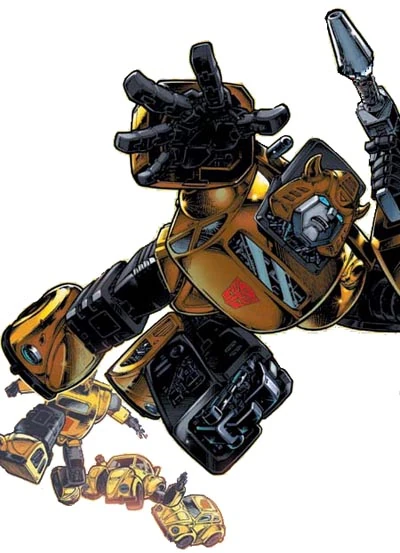

Most—but not all—Transformers possess the ability to assume a secondary shape of some kind, usually referred to as an "alternate mode" or "alt-mode": this may be a vehicle of some kind, an animal-based "beast mode", or some kind of inconspicuous inanimate object. However, Cybertronians are nothing if not adaptable; across the multiverse, Cybertronians have become weapons, household appliances, plants, musical instruments, and even food. Some Transformers possess unusual forms of transformation: they may be able to transform many times faster than their compatriots, or possess additional size-changing powers that let them shrink into a much smaller alt-mode. Some rare Transformers, such as the Triple Changers and Six Changers, can assume multiple alternate modes; with ten distinct alternate modes, Robots in Disguise Galvatron holds the record for the largest number of distinct alternate modes exhibited by any single individual. In other corners of the multiverse, rare subgroups such as the Shifters and Infinites have displayed the ability to transform into almost anything.
Some early stories, including the original The Transformers cartoon and many early storybooks, presented the ability to transform as a wartime innovation, or else an unforeseen consequence of the Ark rebuilding its damaged occupants. In time, however, the fiction came to regard transformation as something innate to the species; all modern Transformers stories have established that Transformers either come into the world with a predetermined alternate mode or the capability to assume a secondary shape. A Transformer's first alternate mode may be an alien vehicle adapted for life on Cybertron, sometimes known as a "Cybertronian alternate mode". Transformers looking to blend in on planets like Earth will often adopt a less conspicuous shape based on the local machinery. Some Transformers struggle with a unique disorder known as "mode attachment", and refuse to ever change the details of their alternate mode.
Perhaps unsurprisingly, transformation plays a key role in Cybertronian society. A vehicle form allows a Transformer to travel long distances and haul heavy loads; on primitive planets like Earth, Autobots and Decepticons can hide in plain sight from their enemies and move through populated areas without attracting attention. In certain combat situations, military alternate modes like jets or tanks can act as stable weapons platforms when the need arises. An alternate mode may also be protective in nature: in the Beast Wars television show, the Maximals and Predacons used organic beast modes to shield their robotic components from harmful energon radiation. It is important to note that Transformers merely mimic whatever it is they transform into, and do not take on all of its capabilities. Transformers who transform into cars and trucks still require energon instead of gasoline, while Cybertronians who turn into organic beasts possess robotic components underneath a layer of artificial flesh. As such, it is possible to find a Transformer in disguise by tracking its unique energy signature, although some advanced Cybertronians have taken steps to baffle, shield, or otherwise mask these traces. Some Cybertronians enhance their disguises with holomatter technology, creating hologram drivers to further blend in with their surroundings.
Early "Generation 1" stories suggested that the process of taking on a new alternate form required outside intervention—either a piece of sophisticated hardware like Teletraan I's repair beams, a full manual rebuild carried out by an accomplished engineer, or a supernatural plot device such as Unicron. In time, this concept was phased out. Beginning with the Beast Wars II anime, subsequent works of Transformers fiction established that Transformers possessed all the necessary hardware to reconfigure their bodies on the fly. By "scanning" a vehicle, animal, or object, a Transformer's onboard systems can immediately reconfigure their bodies so that they can transform into a copy of that specific shape, overwriting whatever form they previously possessed. Scanning an alternate mode can be a rite of passage: for many Cybertronian societies, taking on a first alternate mode is regarded as an important part of the maturation process. Sometimes, a Transformer must learn to transform on their own, often unlocking this power through mindfulness and meditation; in other realities, an onboard computer coordinates the process, sometimes triggered by a spoken activation code.
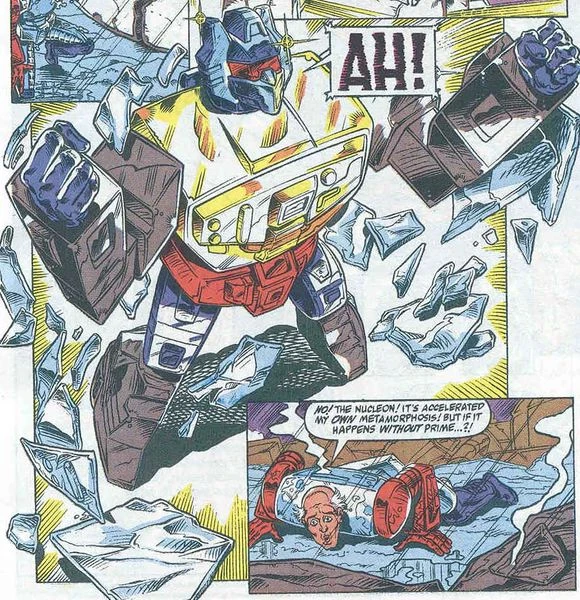

Modern Transformers fiction has uniformly tied the power to transform to the transformation cog (sometimes "T-cog"), an advanced mechanical "organ" which controls the speed, direction, and overall momentum of a Cybertronian's transformation, in addition to controlling ancillary functions, including built-in weapons and the ability to scan new alternate modes. While the concept originated in the original Transformers cartoon, the notion wouldn't be properly resurrected until the mid-2010s, as part of the ""Aligned" continuity. 2013's The Covenant of Primus tied the transformation cog to Amalgamous Prime, a member of the Thirteen credited with introducing transformation itself to the Cybertronian race, but this explanation didn't really catch on; subsequent Transformers tales have treated the T-cog as a mundane (albeit highly sophisticated) device.
Conversely, Transformers may lose the ability to transform. Devices such as the Transfixatron and the Transformation Lock Lens can temporarily trap Transformers in one mode. Many stories have explained that transformation burns large amounts of fuel with every conversion; consequently, underfueled Transformers may struggle to transform and indeed may choose to remain in one form over the other. Factors like age can impede a Transformer's ability to change shape. Other works of fiction have linked a permanent loss of transformation to Nucleon, a mutagenic superfuel which changes Cybertronians into non-transforming Action Masters. In other cases, giving up the ability to transform may be psychological. Cybertronians like Geosensus and Leviathan may stay in their alternate mode for years at a time out of personal preference; others, such as the members of the Militant Monoform Movement, voluntarily remove their transformation cog and may even have their alternate mode parts surgically removed.
Sparks
Main article: Spark
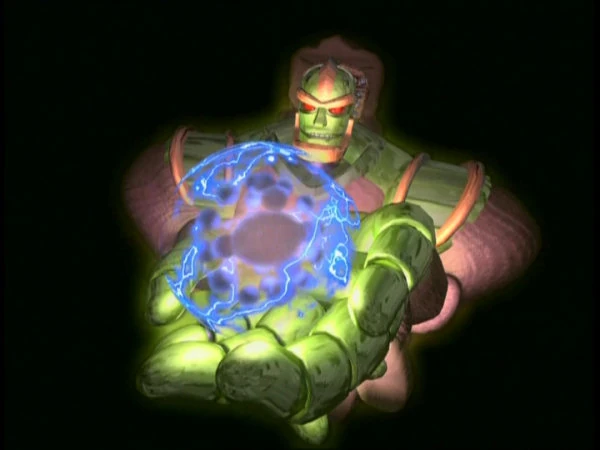

All Transformers possess a spark, a uniquely charged mass of positrons formed from Rarified Energon. Part soul, part heart, the spark is a tangible, animating "life force" that sets Transformers apart from ordinary machines. Sparks were introduced in the Beast Wars cartoon episode "The Spark", which firmly established that all Transformers, past and present, possessed sparks; accordingly, this notion has gone on to inform every incarnation of the Transformers franchise, and has even been retroactively applied to the Transformers who appeared in the earliest Generation 1 continuities.
A Cybertronian's life begins with the ignition of a new spark, which is usually implanted into a suitable body some time after their creation. While animating a Transformer, the spark resides in a specially shaped "spark chamber", which is usually located somewhere within the torso. When a body can no longer safely support a spark, the spark is "extinguished" and the Transformer in question dies. As the nexus of the Transformer life cycle, the spark plays a major role in their culture and religion. Many Transformers stories have connected sparks to Primus, benevolent creator-god of the Transformers, with the idea that that each Spark contains an infinitesimally small fragment of his divine essence. Beast Wars and Beast Machines established that Transformer sparks are born from the Allspark, a combination pre-life and afterlife from which all Sparks are born from and ultimately return to. Specific Transformers may possess Sparks with unusual powers or abilities, which may physically manifest as aberrant superpowers.
The spark's relationship to the rest of the Transformer is somewhat nebulous, and varies across continuities. In some stories, a spark is the sum totality of a Transformer; it can be extracted from the body of one Cybertronian and implanted into the frame of another, effectively "uploading" the memories and personality encoded in that spark into a new body. In other continuities, the spark's presence in the body is harder to define; in these continuities, it coexists with other components crucial to Transformer life, such as the brain module, which makes it harder to define where certain aspects of Transformer life begin or end.
Some Cybertronians are created without sparks, and these Transformers are generally referred to as "drones". Most drones are little more than mindless robots without any capacity for speech, emotion or creative thinking; others are more sophisticated, and may possess an advanced artificial intelligence that allows them to think, speak, and emote. However, the lines of sapience are blurry, and many Cybertronians do not consider these Transformers to be truly "alive".
Fuel
Main article: Energon
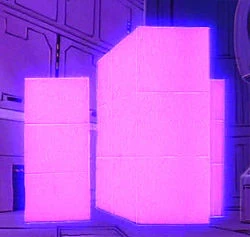

While humans require regular infusions of air, water, and food to maintain their biological processes, Transformers simply require regular access to a power source to stay alive. However, the Transformers are an ever-expanding race. The search for new energy sources has led to many conflicts between different Transformer factions and the frequent depletion of Cybertron's own natural resources. The specific mechanisms of the Transformer metabolism are not well-understood, but many stories show Transformers orally ingesting fuel sources—sometimes energon, sometimes human fossil fuels like oil or gasoline—the way humans would drink a beverage, sometimes in a recreational setting like a bar or tavern. Indeed, Transformers who overdose on particularly potent fuel sources may display symptoms consistent to human intoxication: these include a loss of balance, slurred speech, and impaired decision-making skills.
Early stories, like the Marvel comic, suggested that Cybertronians ran on a nebulously defined "Transformer fuel", which could be created from hydrocarbon-based fuel sources like oil, coal, and gasoline; the Transformers were incapable of metabolizing these substances in their base form, and required technology to efficiently process ordinary fuel sources into this fuel. The Sunbow cartoon introduced energon cubes as a Decepticon fuel storage medium; eventually, the show began using the term "energon" to refer to the glowing liquid within the cube itself.
All Transformers stories published after the end of the Marvel comic have established that Transformers subsist upon energon, which has been consistently established as a naturally-occurring element that occurs throughout the universe. Beast Wars established the existence of naturally occurring energon crystals. These "raw" crystals can be harvested and refined into the more familiar "stable energon" that powers Transformers. In many realities, this "stable energon" can be refined further to create weapons, armour, or even a Matrix. Subsequent stories have established the existence of multiple energon variants with their own unique powers—these include Red Energon, Dark Energon, Tox-En, Chronogon, Primal Energon, and Ore-13. While Transformers can process some of these subtypes, others are considered dangerous and many come with their own unpredictable side effects.
Transformers may be forced to survive in environments where refined energon is not readily available. In some stories, Transformers can synthesize a usable fuel substitute from local energy sources, but these derivative fuels are generally poor substitutes for the genuine article. Cybertronians can metabolize exotic substances like Nucleon, although these substances come with their own unpredictable side effects. In other stories, Transformers have displayed the ability to live off of human energy sources like fossil fuels. Some Cybertronians have developed methods of turning organic material into a usable energy source. In its simplest and least efficient form, this process simply involves grinding organic beings into a crude energon derivative, sometimes known as "biofuel" or "pink alchemy". More advanced Cybertronians with beast modes might utilize an onboard biomass processor, which fuels their robotic superstructures and nourishes their organic components.
Rather than change their diet, many Cybertronians have turned to technology to help manage their fuel efficiency. Transformers who undergo the Powermaster process, for instance, are binary bonded to an organic being, a "living battery" capable of converting organic calories into energy. The Micromasters deliberately adopted smaller, more fuel-efficient bodies capable of functioning on a fraction of the energy required to power the Transformers they derogatorily refer to as "guzzlers". The Maximals and Predacons of Beast Era Cybertron would follow in these footsteps; by their time, three hundred years after the end of the Great War, the entire Transformer race had downsized to the point where they were only slightly taller than an average human.
A number of stories have indicated that, in addition to energon, Transformers have shown the ability to eat certain forms of metal. On their home planet, this has given rise to a range of Cybertronian food items, which include iron filings, grated gears, and the ever-popular beryllium baloney. Few stories have really explained why or how Cybertronians digest these metallic substances, but at least one notable Cybertronian subspecies has specifically adapted to metabolize vast amounts of metal.
Combination
Main article: Combiner
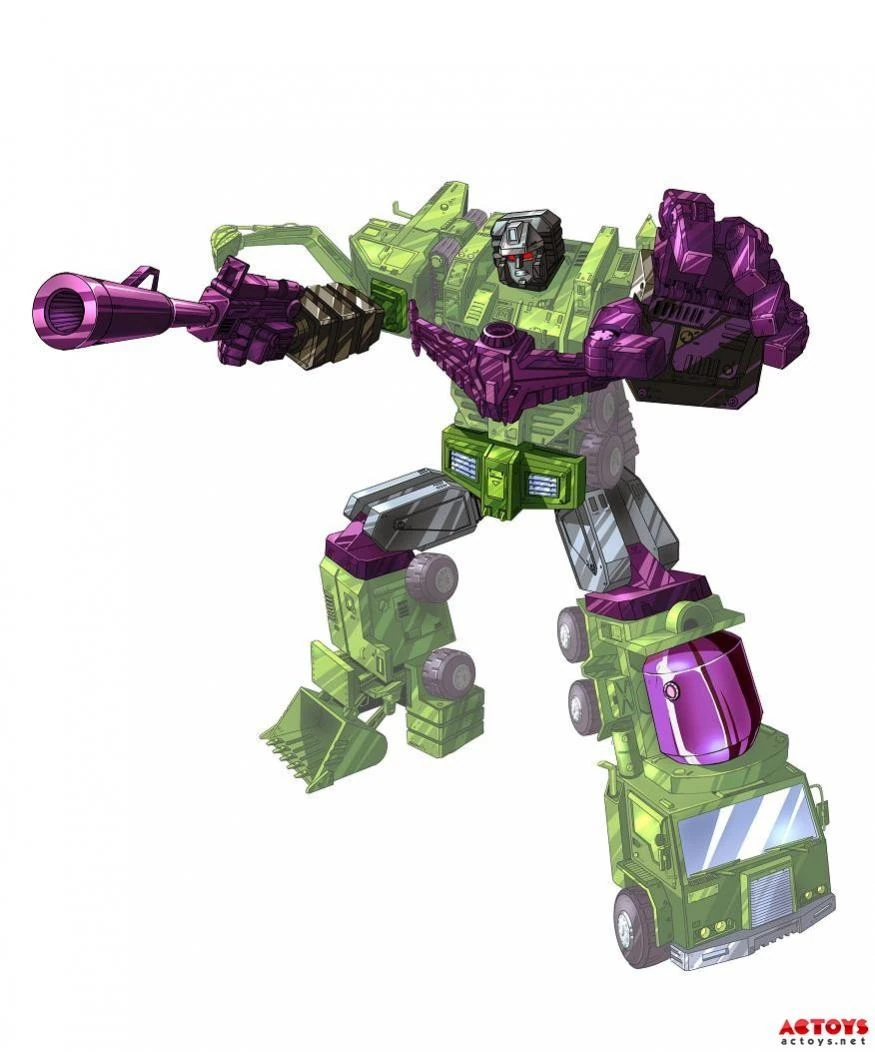

Some Transformers have displayed the ability to physically interlock with one another, merging their bodies into a larger and more durable form. The Micromaster Combiners each transform into one half of a shared vehicle mode, while Mini-Con teams such as the Air Defense Team, can unite to form weapons such as the Star Saber, which can be wielded by other Cybertronians. In many realities, a Transformer can undergo a special form of combination known as "powerlinxing", where linking up with a Mini-Con triggers a unique one-time physical evolution, which allows a Transformer to spontaneously gain new weapons and powers. In other cases, Transformers may combine with non-sentient machines, such as specialized battle platforms or trailers, to form a more powerful "super mode". Rare Transformers like Magmatron and Sky Lynx possess a unique mitotic spark and can split their bodies into multiple independent components, each containing a portion of their overall mind.
However, the most famous examples of combiners are those Transformer teams with the power to unite into a single super robot, larger and more powerful than the sum of its components. In this form, the individual minds and personalities of the robots involved in the combination merge into a single, unified whole; in most cases, this creates an entirely new being with its own name, personality, and consciousness. In this form, individual combiner team members can sometimes influence the actions of their overall combined body--in extreme cases, one individual can completely override all other minds, with their combined form simply acting as an extension of their normal self. Fans often refer to these combiners as gestalts based on the the real-world theory of gestalt psychology; although the term began as fanon, Hasbro and its licensees picked up on the term, which still sees sporadic use today.
The first works of Transformers fiction suggested that combination technology was a relatively new innovation developed after the Autobots and Decepticons came to Earth. Later instalments, which showed active combiner teams on Cybertron and other planets, soon superseded these early implications. Many stories throughout the early 2000s shifted to presenting combination as a rare, sometimes explicitly supernatural technique--some stories, such as IDW's Transformers comics, presented combination technology as a dangerous lost art. Around this time, Fun Publications introduced Nexus Prime, a combining member of the thirteen original Transformers. Subsequent stories established Nexus Prime as the original combiner and the master of the Enigma of Combination, a mysterious relic that could instantly reconfigure any two or more Transformers into a compatible combiner.
Subsequent depictions of combination have largely shifted toward something more supernatural than scientific in nature; in most contemporary stories, combiners are either the product of the Enigma of Combination or arcane super-science.
Weapons and abilities
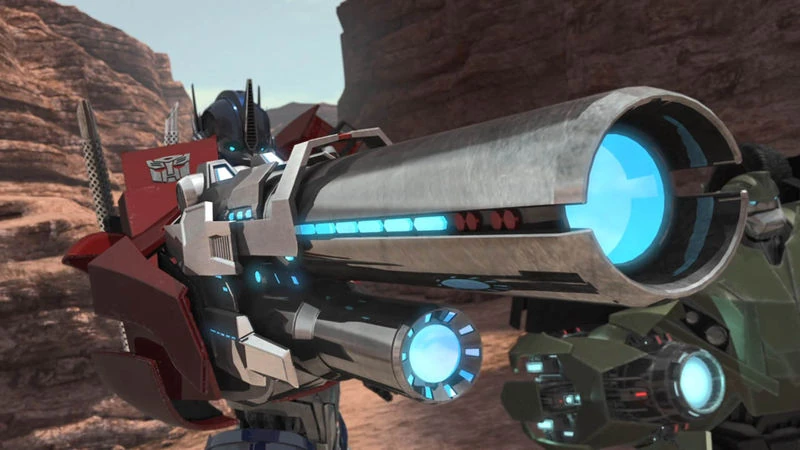

Optimus Prime with his ion blaster
Even the most peaceful Cybertronian is far from harmless; while the sheer bulk of their massive mechanical bodies poses an inadvertent threat to smaller life-forms, most, if not all, Transformers also have access to a devastating variety of weapons. The earliest Transformers stories faithfully depicted the various accessories packaged with individual toys as unique handheld weapons, with Bob Budiansky coming up with a wide variety of powers to set each gun apart from the next, such as Cliffjumper's signature glass gas. Other weapons, such as Prowl's shoulder-mounted cannons, are directly incorporated into their physical form. Like humans, Transformers may display a proficiency with long-ranged artillery weapons, medium-ranged rifles and pistols, or melee weapons like axes and swords. Individual weapons display varying levels of sophistication: melee weapons may be made out of solid metal alloys or pure energy, while their guns may fire bullets, slugs, chemical compounds, or exotic laser bolts.
Where exactly Transformers store these weapons when not wielding them was something of a mystery for many years; some obscure media would later declare that the majority of Transformers have access to a "subspace storage pocket:" a miniature dimension capable of storing matter, and the place where weapons and other accessories (e.g. Optimus Prime's trailer) went when not in use. Later stories, most prominently the original 2007 film and its sequels, would drop this concept entirely. Rather, these stories depicted the various weapons of any given Transformer as "built-in" extensions of their natural bodies, depicting their weapons as physical transformations for their hand and forearm. This treatment carried over into the 2010 Prime cartoon, though it would be dropped once again for its 2015 sequel.
In other instances, Transformers may possess rare abilities that, while they may not have a directly offensive use, set the Transformer apart from their comrades. Depending on the universe, these may be the result of natural upgrades to their bodies, or a sort of "genetic mutation" that distinguishes them from other Transformers—see Skywarp's ability to teleport himself from place to place, or Windcharger's power to generate magnetic fields.
Organic components
See also: Pretenders, Maximals and Predacons (Beast Wars)
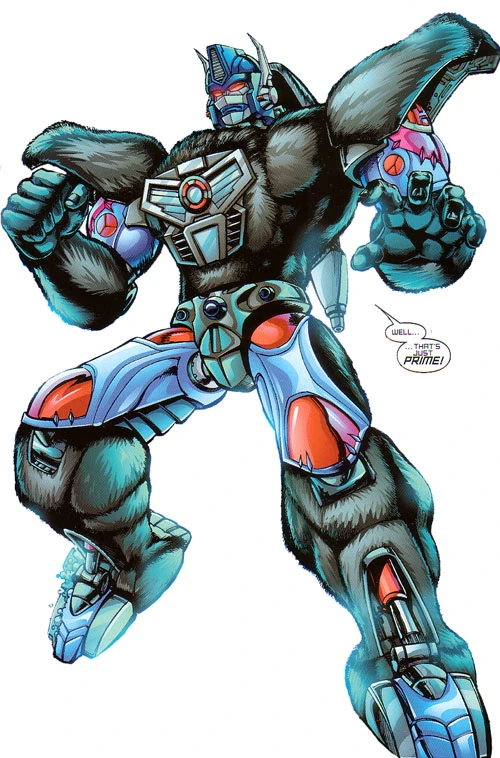

Cybertronians are a constantly-developing race, and after making contact with non-mechanical intelligences both Autobots and Decepticons have been known to harness the potential of organic life, as both weapons of war and to advance their own development as a species. Though these upgrades are powerful, and frequently coveted by other Cybertronians, not all Cybertronians are convinced of the soundness of this so-called "evolutionary leap;" some Transformers view the prospect of carbon-based life as repulsive, and these technologies as revolting or downright heretical.
The fusion between organic and mechanical takes many forms across the vast Transformers multiverse, running the gamut from simple binary-bonded partnerships—where a Transformer develops a symbiotic partnership with a smaller creature, to the point where they may telepathically merge into a single entity—to the advanced Pretender armour, concealing the mechanical shape of a Transformer beneath a specially-tailored "shell" that incorporates organic matter. These so-called "Pretenders" possess enhanced regenerative abilities, with their shells even allowing them to pass as non-robotic humanoids.
In those future universes where the Great War gives way to the Beast Era, the Maximals and Predacons will go on to develop advanced DNA scanners; thanks to advancements in both Micromaster and Pretender technology, these future Cybertronians are able to copy genetic material and directly integrate organic components into their structures, allowing them to disguise themselves as organic life without the need for an external Pretender shell. Even this arrangement can be enhanced: exposure to the energies of the Oracle can unite both forms of life at the cellular level to create the first "technorganic" Transformers, a form of life said to be neither organic nor technological.
Gender
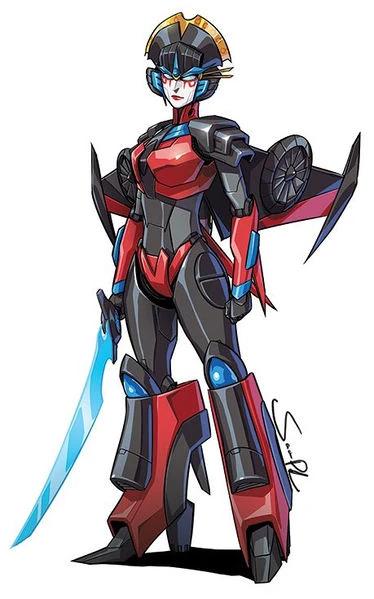

As Transformers is generally a kid-friendly franchise, most continuities have established that Cybertronians employ decidedly asexual methods of reproduction. This quirk of their reproductive biology originally, at least in part, stemmed from Hasbro, who initially didn't want any girl robots appearing in their boys toyline. Faced with this restriction, Bob Budiansky invented the Creation Matrix to explain how the Transformers reproduced. This edict didn't last long, however: early into its development, The Transformers: The Movie introduced the extremely female Arcee as a member of the film's cast, and this change took place early enough in development that The Transformers cartoon was able to introduce a whole squad of "Female Autobots" in the second-season episode "The Search for Alpha Trion". Although great strides have been made in terms of representation, the male-to-female ratio across the franchise remains skewed greatly in favour of the former.
Historically, most Transformers stories have not touched on what gender really means in a civilization of alien robots. Some stories presented them as an aberration "outside" the Cybertronian norm, their femininity the result of alien interference or malevolent genetic experimentation. The Covenant of Primus tied them to the mythical Solus Prime by explaining that their use of feminine pronouns denoted "key feature differences" related to information processing they'd inherited from their spiritual progenitor, but this bit of world-building never really caught on. More recent changes in the real-world pop culture landscape, combined with an increased number of female creatives in the Transformers franchise, have led to a more inclusive approach that simply depicts female Cybertronians and their gender presentation as a natural aspect of their species that doesn't require any kind of convoluted explanation.
In the 2010s, older-skewing media like Ask Vector Prime and IDW Publishing's Transformers universe began tackling deeper issues relating to gender and gender identity by introducing a number of transgender characters such as Anode, Lug, and Arcee. A brief mention in other media led to the thus far only transmasculine Transformer, one version of Archadis. A handful of non-binary characters were introduced in the late 2010s through retroactively-added explanations; the first Transformer written intentionally as non-binary, Nightshade, was introduced in EarthSpark in 2022.
While the first crop of female Transformers characters generally resembled human women in armour, with only the faintest of nods towards any kind of workable transformation scheme, later characters introduced to the Transformers mythos have diversified in both appearance and personality. Some later female Transformers like Glyph and Nova Storm even share body-types with male characters like Bumblebee and Starscream.
Life cycle
Birth
See also: Protoform and Hatchling
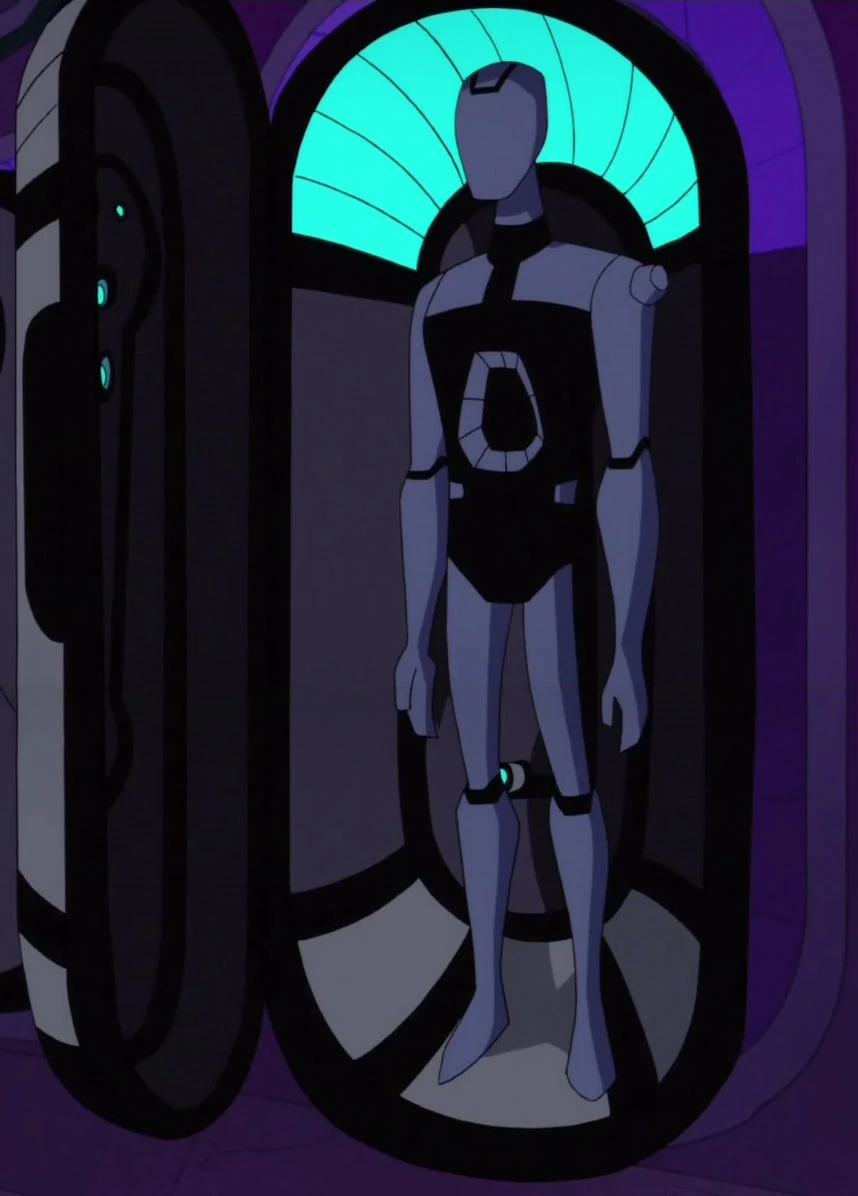

Being a franchise primarily aimed at children, most Transformers continuities have firmly established that Transformers reproduce asexually, although the specific mechanisms of how a new Transformer comes into existence can vary wildly, sometimes even within the same universe. In some older Transformers stories--specifically those early "Generation 1" stories from before the Beast Wars television show--it was possible for Cybertronians to simply build new Transformers from ordinary materials, as was the case with the cartoon's incarnation of the Dinobots, but this idea has been phased out time. Because Transformers usually do not possess the capability to create new sparks by themselves, they must instead rely on a supernatural artifact to do it for them. Different Transformers tales have credited the generation of new sparks to various supernatural artifacts--these include the life-giving AllSpark, the Vector Sigma supercomputer, the Primal Program embedded within the Matrix of Leadership, or the Emberstone of Quintus Prime.
In some cases, the creation of a new spark leads to the spontaneous generation of a new body for them to inhabit. In others, the life-giving energy of the AllSpark or sufficient quantities of energon radiation can spontaneously bring an ordinary Earth object to life as an "energon mutation", instantly reconfiguring its physical form into a sentient (but not always sapient) Cybertronian. Alternately, a spark may simply be implanted into a pre-built chassis; after this infusion, a new Cybertronian simply springs to life. Still other continuities have established that Transformers are capable of "budding", a mitosis-like process in which a Transformer surrenders excess living metal to create a second Transformer. With the right technology and access to a Transformer's genetic data, it's even possible to clone them.
Many continuities have established that new Transformers begin as a humanoid mass of ultra-dense liquid metal known as a "protoform". Depending on the universe, a protoform may be a sentient being capable of speech, thought, and independent movement, a developing lifeform more akin to a human embryo, or something in-between. A protoform is generally understood to have matured into a full-grown Transformer when it adopts an alternate form--either through scanning a suitable shape or following the genetic instructions hard-coded within its spark. This process is generally understood to be very fast, occurring in a matter of days, hours, or even minutes, depending on the continuity. In some universes, Transformers can voluntarily revert themselves back into a protoform state for a variety of reasons.
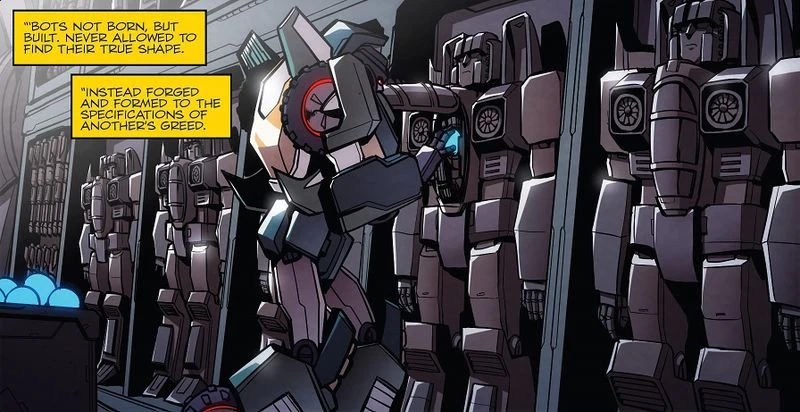

Seekers that have been constructed cold
Transformers may be born alone or in a group, sometimes referred to as a "batch". Transformers who are born rather than built are sometimes said to be "forged". A small number of Transformers possess siblings; in most cases, these siblings are specifically noted to be twins. Attempts to explain this phenomenon have tied it back to the mechanics of the spark or the protoform, with the idea that a developing Transformer can divide like a human zygote. A few other stories have suggested that all Transformers who roll off the same "assembly line" might share similar components and appearances. Future Transformers, such as the Maximals and Predacons, often speak of their "ancestors", although these genealogical references may be allegorical in nature. Transformers responsible for creating other Transformers, as was the case with Grimlock and the Technobots, are often seen as quasi-parents to their creations. A few continuities, most prominently the the live-action Bay films and a number of Japanese-exclusive comics, have extended this notion to the idea that the Transformers of these universes possess mothers, fathers, and cousins... although how exactly this arrangement works is left as an exercise to the viewer.
Early life
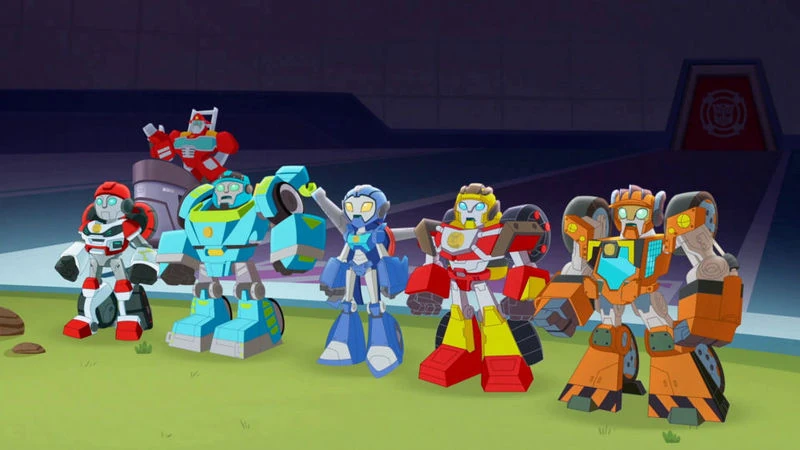

While human children are born as helpless infants and take years to master basic life skills, Transformers are brought online as precocious, more-or-less independent lifeforms: from the moment of their activation, they can walk, talk, speak, reason, and fight. Some Transformers may pass through a period comparable to human adolescence before reaching full maturity, but this growth is, by and large, an entirely mental process. A Transformer's personality traits are established rather quickly after their creation; sometimes, newborn Transformers may even display more "mature" personality traits compared to their older peers. Perhaps because of this unusual life cycle, most Transformers do not have much of a concept of "childhood" as humans know it; in many stories, Transformers view mothers, fathers, children, and familial relations as something entirely alien to their specific worldview. However, some Transformers tales have established loose equivalents to these concepts; for instance, young Cybertronians may possess quasi-parental "mentors", and groups of related individuals may organize themselves into "clans" or "houses". In other universes, Transformers are said to possess various relatives or even twin siblings, but the specifics of these arrangements are not always clear.
Historically, most depictions of Transformer "childhood" tended towards the comedic and were thus of dubious veracity—for instance, Side Burn once claimed that he had been a non-transforming tricycle in his youth. As most Transformers stories take place long after the outbreak of war and the collapse of any organized society, few continuities explored how exactly young Cybertronians are socialized and educated. However, some more recent works of fiction, most prominently Earthspark, Rescue Bots Academy, and IDW's rebooted Transformers universe have featured a more detailed look at the lives of young Transformers as they mature.
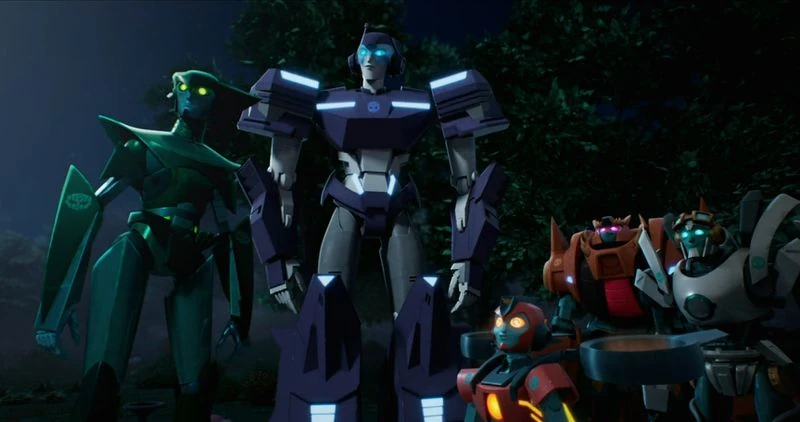

The Terrans that were adopted by the Malto family in Transformers: EarthSpark
Depending on the nature of their universe and the specific circumstances of their creation, a Transformer may be born with a functioning alternate mode; in other stories, they may have to scan a form for themselves at some point after coming online as part of the transition from a base protoform into a quasi-adult Transformer. In some continuities, newborn Transformers may dream of their alternate form before they transform for the first time. Although Cybertronians don't celebrate birthdays in the same way that humans do, the birth of a Transformer during peacetime may be commemorated with a ceremony or sometimes a dangerous rite of passage to prove their courage, such as a trip through Cybertron's subterranean underworld. Occasionally, young Transformers like Stardrive, Lio Junior, Flathead, or Sari Sumdac have been adopted by non-Cybertronians and raised in isolation from the rest of their species. No matter the circumstances of their adoption, these individuals consistently displayed the ability to imprint on their surroundings and assimilate into the local culture, to varying degrees of success.
Like humans, young Cybertronians generally learn life skills in a group setting. Cybertron established that all young Transformers go through a generalized education known as primary programming, while Animated showed young Autobots graduating from Autobot boot camp. Multiple continuities have also established the existence of specialized institutions for Transformers who seek to master specific vocations: these include various civilian universities, medical schools, and scientific institutes, in addition specialized military academies. Graduates may eventually take the skills they've learned into the field with them or choose to master multiple scientific disciplines as part of Cybertronian academia.
Lifespan
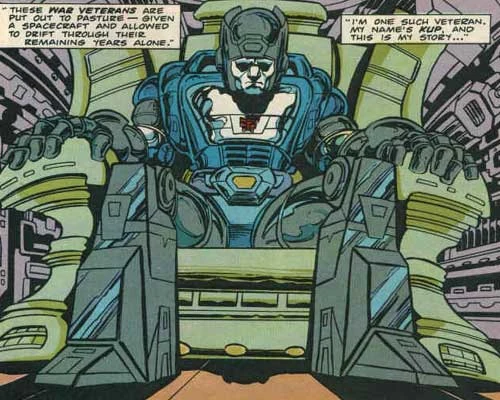

As mechanical beings, most Cybertronians are an incredibly long-lived, and even "young" Transformers may be older than any living thing on planet Earth. Though the specifics may vary, Transformers measure time in terms of millions of years and generally exist on a fundamentally different timescale than humanity—the precise age of Transformer civilization differs from one continuity to the next, from IDW's twelve million years to Animated's claim of "over ten billion years"—but across all of these continuities it's made clear that Cybertronians are not bound to the fleeting lifespans of short-lived organic beings; their histories, empires, and wars playing out over a period of geological epochs.
A conservative estimate would put the average Transformer lifespan at four to seven million years, though the actual number may be much higher. The 2018 Cyberverse cartoon, for example, has suggested that its cast of characters are more than 65 million years old, with the Autobots having landed on Earth during the end of the Late Cretaceous era.
An individual Cybertronian might grow to a venerable age, outlasting entire civilizations in the process, but they are not truly immortal beings. Though one might assume that, as robotic lifeforms, a Cybertronian could simply replace worn-out parts indefinitely, it is clear that Cybertronians do age, many indeed become "elderly", (in some cases, this manifests as a variety of memory and mobility-related problems) and even die from age-related complications, such as cybercrosis. The precise nature of Transformer aging is not well-understood, though several continuities, such as the Wings Universe or the live-action film series, have linked the process to a prolonged period of fuel depletion. These sorts of "natural" deaths are very rare in the franchise; as Transformers is a war story first and foremost, it is far more common to have Transformer lives simply cut short for one reason or another.
Death and afterlife
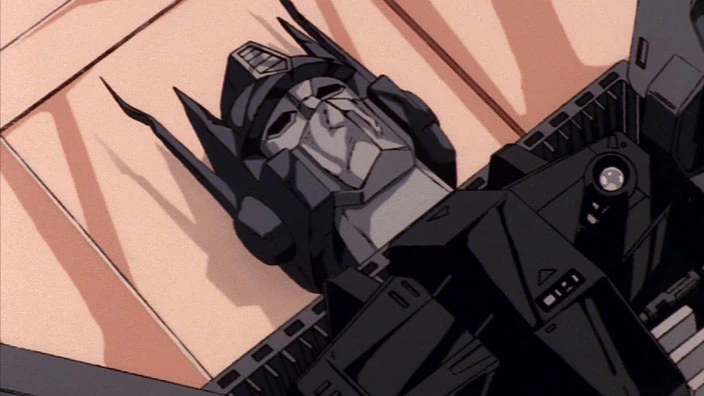

Though long-lived, powerful, and able to quickly recover from even grievous injuries, Cybertronians are not invincible, and can be killed like any other lifeform, as has been demonstrated again and again by their endless wars. Exactly what it takes to bring down a Transformer varies from one continuity to the next—and, more cynically, as the needs of the plot demand—but for the most part the death of a Transformer is accompanied by the extinguishment of its spark.
Transformers can be killed through ways that are analogous to human causes of death: they can be shot, stabbed, blown to bits, or otherwise damaged by weapons to the point where their body can no longer function, their heads and torsos can be mutilated beyond repair by decapitation or simple blunt impact trauma, or their physical structures can be broken down by toxic compounds designed to damage their living metal. A Transformer can be "poisoned", sometimes lethally so, by ingesting the wrong kind of fuel, or they can simply "starve" to death if they are unable to refuel for long enough. Transformers may also die from uniquely robotic causes; long-term exposure to exotic forms of radiation may short out their circuitry, while exotic diseases like Cosmic Rust or Scraplets can destroy their mechanical bodies from within. In those universes where science and sorcery coexist, Cybertronians have also displayed a glaring vulnerability to magic. As a story of war, all of these fates and worse have befallen various Transformers across the multiverse.
Unlike humans, however, who may or may not profess a belief in an afterlife without any concrete evidence, the various afterlives are generally regarded as real; when a Transformer's spark is extinguished, it merely returns to the metaphysical dimension alternately referred to as the "Allspark" or "Afterspark", supposedly connected to the entirety of the Transformer race across the multiverse, where it can commune with the other spirits of the departed.
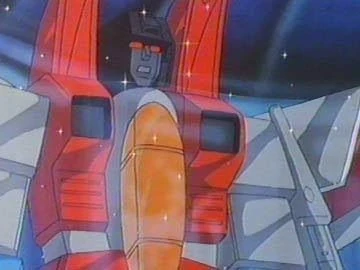

The ghost of Starscream
Death does not necessarily mark the end for a Transformer, however. It is possible that a Transformer may return to life if the spark can be plucked from the afterlife and safely transferred into a new vessel. In other cases, the spark itself may choose to re-enter our physical world if the need is great and resume life as a mortal Transformer. A handful of Transformers, most infamously Starscream, have displayed the ability to survive the complete physical destruction of their body and continue existence as a spectral "ghost", displaying typically ghostly skills such as intangibility and the power to possess the bodies of other Transformers. Various sources have flagged this ability as a rare spark-based "mutation," and as such it is the exception, not the rule.
In still other instances, Transformers may be resurrected as zombies; in most cases, these are dead Transformers whose physical shells have merely fallen under the control of another, and lack the sparks that characterize Cybertronians as truly "alive".
Culture
Regardless of continuity, the most distinctive facet of Cybertronian society has been its near-continuous state of planetary civil war between the Autobots and the Decepticons. The conflict is mostly defined by what each faction believes is the "destiny" of the Transformers: the Autobots believe in a peaceful society where Cybertron is a place of culture and justice, while the Decepticons believe in a "might makes right" philosophy where Cybertron would be the center of a mighty empire. The fact that the vast majority of what we know about Transformers has been shaped by this constant, corrosive warfare should not be overlooked.
Society
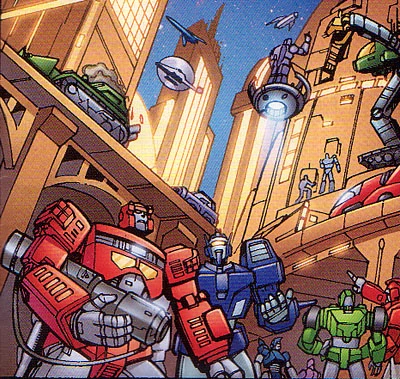

Individual depictions of life on both pre-war and post-war Cybertron have varied wildly from one continuity to the next, but most continuities have established that Transformers organized themselves into societies comparable to most modern human civilizations, with many of the same hallmarks: a written language, clear division of labour, an organized government, complex social hierarchies, and education systems designed to pass on knowledge and culture to newly forged Transformers. Individual career paths on Cybertron are largely analogous to many human jobs: soldiers, teachers, construction workers, miners, journalists, professors, scientists, bartenders, and sanitation engineers, to name a few. Other facets of society are similarly Earth-like, with fads and fashions, theater, film, aristocracy, poverty, and so on. Millions of years old, life on Cybertron is very much guided by ancient traditions and millennia-old schools of thought, and many Transformers regard their forebears with great reverence and respect—even if a cursory analysis of the history books reveals that those "ancestors" were not particularly upstanding individuals themselves.
Unlike humans, however, Cybertronians place great importance on the value of their shapeshifting abilities and alternate modes, and have been known to divide themselves into social groupings based on this premise. Depending on the universe, those Transformers who share a similar alternate mode or profession—for instance, all Transformers who become aircraft, or those who work in Cybertron's various scientific fields—may be lumped together under a single, inflexible social group or caste. The rigidity of this system varies by continuity, but some universes have taken this concept to the extreme, such as the Aligned continuity family's depiction of its caste system or IDW's Functionism as the defining trait of pre-war Cybertron. In many continuities, pre-war Cybertron has been depicted as something of a dystopia; whether this is due to energy shortages, an oppressive government, and simple cultural stagnation, these stories portray the planet and its culture as crumbling, highly stratified between "haves" and "have-nots," and overseen by a bloated and corrupt government in the final years before the rise of the Decepticons. Not all modern Transformers fiction adheres to this rule, however, such as IDW's 2019 comic reboot and its decision to reimagine the planet as an enlightened, largely egalitarian utopia.
The Transformers are a naturally expansionistic race, and their development has been punctuated by the periodic colonization of other planets throughout the universe. What this colonization entails depends on the intentions of the Cybertronians; Cybertronians may change their worlds to fit their needs through cyberforming, strip-mining and rebuilding the planet into a miniature copy of Cybertron, while in other cases Cybertronians may adapt by changing themselves, leaving the planet in a more-or-less natural state. Many universes have established that this period of colonization and expansion occurred in the distant past, with the various colonies cut off from Cybertron in the present day; in the interim, these isolated Transformer outposts may develop over time to become entirely new kinds of Transformer, with their own unique societies.
Wartime Cybertronian society is portrayed as heavily polarized between Autobot and Decepticon. Neutrality is rare, and when neutrals do exist, they generally fare poorly, becoming victims of Decepticon abuse and destruction or being otherwise forced to flee the planet. Those rare universes where the Great War is allowed to come to an end feature reconciliation and reconstruction efforts aimed at rebuilding a wounded planet and otherwise move on from a dark era of death and destruction. But some Transformers are incapable of letting go of their grudges; armed pockets of resistance may hold out for years on backwater planets, while more clever individuals may gather like-minded dissidents to plot revenge from the shadows. Years after the ratification of an official armistice, even the most open-minded of Transformers may still continue clinging to old allegiances, with post-war society developing along strict factionalist lines.
Some Transformers refer to the ideal outcome of Cybertronian civilization as the "Pax Cybertronia", ushering in a prosperous future for the galaxy by bringing lasting peace to the Transformer homeworld and beyond.
War
See also: Great Cybertronian War, Beast Wars and Sparkwar
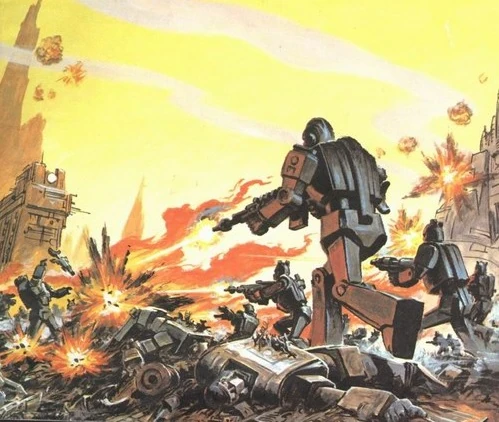

The history of Cybertron is the history of a planet wracked by brutal civil wars, interspersed with comparatively brief "Golden Ages" of peace and prosperity. Not unlike humanity, the process of war and reconciliation tends to be depressingly cyclical: the outcome of one war leads to a disaffected group of individuals who inevitably spark the next great war. Though the most famous war in the Transformers multiverse tends to be the so-called "Great War," between the (generally) heroic Autobots and the (usually) villainous Decepticons, many other equally destructive conflicts can and have occurred: the First Cybertronian War, or the Grand Uprising, have all pitted millions of Transformers against one another for control of Cybertron, and sometimes the entire galaxy.
The longevity and power of the Cybertronian race means that their wars tend to be brutal, drawn-out affairs, frequently lasting for millions of years and potentially stretching across dozens of planets—these may be Cybertronian colonies, or "neutral" worlds populated by primitive organics. In many of these conflicts, Cybertron itself is rendered uninhabitable, forcing the war off-world. Cybertronians at war do not seem to follow any kind of rules of engagement analogous to humanity's Geneva Conventions; civilians, noncombatants, and wounded soldiers are considered to be viable targets, and the inhabitants of neutral planets may be exterminated, their homes cyberformed, to expand the aegis of a potential Decepticon Empire. Wide-scale atrocities and ever-more elaborate weapons of war are common, and even many Autobot leaders across the multiverse have found themselves making morally questionable decisions in the name of victory.
The constant wars of the Cybertronian race have greatly stunted their potential development as a species; in one of the few universes where Cybertron did not collapse into civil war, the Transformers of that universe gradually evolved into a highly advanced breed of life and devised a system of cross-dimensional travel.
Politics
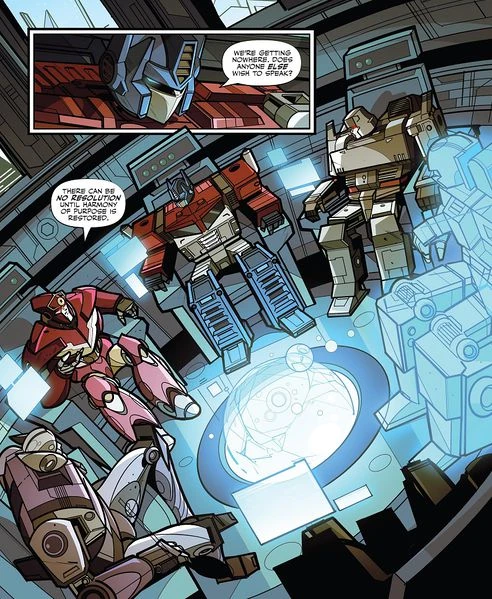

Most Transformer governments are non-democratic in nature, overseen by one or more particularly wise or experienced individuals. This government may be oligarchic in nature, such as the various "High Councils" present throughout the multiverse, monarchic, such as the ancient Overlords of the Marvel Comics continuity, or an outright dictatorship—benevolent or not. All of them seem to wield a great deal of power over both military and civilian institutions. During wartime situations, command over a faction generally falls to a single autocratic leader, occasionally known as the Supreme Commander. Though they may seek counsel and consent from their followers, ultimately wartime decisions are theirs and theirs alone to make. Very few continuities have ever depicted a free or open electoral process on pre-war Cybertron.
On the planetary level, Cybertron is generally organized into a series of autonomous city-states with their own independent governments; some continuities have established that this present-day state of events is the result of the fracturing of larger empires during the earliest days of the Cybertronian race. Depending on the universe, these city-states may be represented by Senators, who meet to discuss international issues as part of the planetary governing body known as the Senate.
Particularly noble or otherwise pious Transformers, such as the Autobots, may gravitate to leadership under a single powerful individual known as a Prime, who serves as a head of state, spiritual leader, and commander-in-chief all in one. In most franchises, this Prime is leader of the Autobots, and their leadership is demonstrated by their ability to wield the Autobot Matrix of Leadership which is generally passed from one successor to the next. Several continuities have demonstrated that Autobot leaders can be removed by the Crisis Act—essentially a vote of no confidence—but this law is not universal. In the Transformers Animated continuity, the supreme commander of Autobot civilization is known as a Magnus, who answers to Cybertron's civilian and military guilds.
Those Transformers who rally under the flag of the Decepticons, however, bow only to the supremacy of the most powerful and normally have no mechanism for peaceful handover of power: power struggles within the faction have occasionally erupted in the form of a Decepticon Civil War.
By the era of the Maximals and Predacons, the planet is dually ruled by both the High Council of Maximal Elders and the Tripredacus Council, each seeming to hold jurisdictions over their respective factions. Both appear to be composed of war veterans from the Great War, Autobot and Decepticon veterans who have retired from an active role in Cybertronian life in favour of guiding a new generation of Transformers. The episode "Chain of Command" suggests that Maximal society is democratic in nature, though IDW's Beast Wars comic would namedrop the Maximal Imperium as the name of their government.
Religion
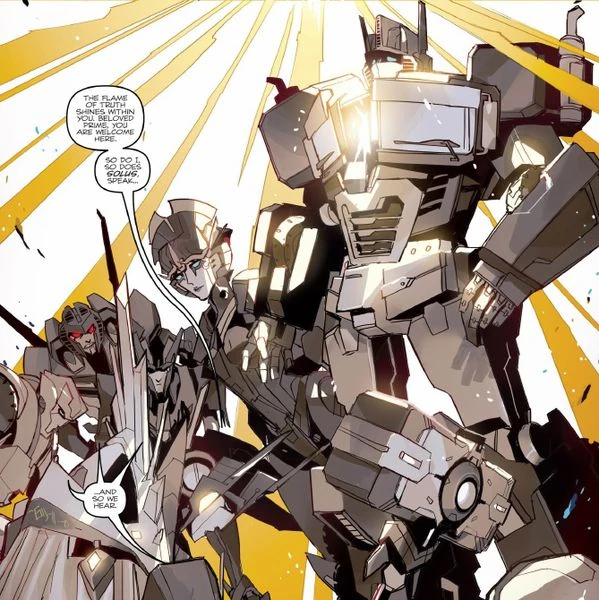

Across the multiverse, different Transformers stories have introduced a wide range of potential belief systems for the Cybertronian race—beliefs that have an alarming tendency of eventually being revealed as more-or-less true. Very rarely are Transformers or their society writ large depicted as atheistic; most Cybertronians seem to hold at least some religious beliefs, though the nature of their faiths are not always clearly outlined. Most Autobots (and even some Decepticons), for instance, view the Matrix of Leadership to be a divine artifact, a combination sacred talisman and symbol of office. Sacred texts such as the Covenant of Primus and various religious rituals are common enough to be considered largely unremarkable in Cybertronian society.
Just like humans, groups of Transformers may choose to worship various deities, or differing aspects of the same deity. In most series, worship of Primus is the most predominant of these faiths, though permutations of Primus-worship take many different shapes; the 2005 IDW continuity, for instance, conflated Primus with the benevolent pantheon of deities known as the Guiding Hand. In more recent continuities, Cybertronians have been known to worship the Thirteen, treating them as infallible demigods, and some particularly pious individuals may choose to deify all those Transformers who hold the rank of Prime or carry the Matrix of Leadership.
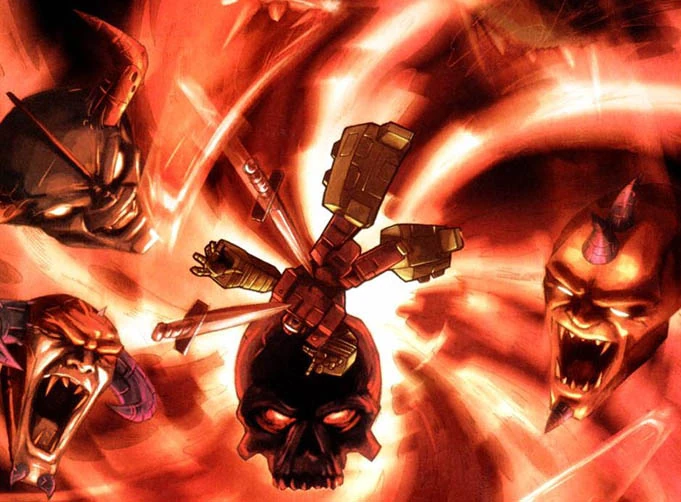

Other religions are more sinister in nature; particularly malevolent Cybertronians may choose to partake in illicit rites aimed at channeling arcane forces such as "dark science". Still others may choose to forsake Transformer society entirely by worshipping the dreaded Unicron. Among their number are the evil member of the Thirteen known as "The Fallen," and a number of different incarnations of Bludgeon, both of whom have pledged to actively spread chaos and disharmony across the universe in service of their new master.
A handful of Transformers have displayed the ability to manifest paranormal powers outside the scope of natural Cybertronian science; they may have gained these powers as part of a dark pact with arcane forces, or they may be the result of studying mystical disciplines, like magic. These rare Transformers may be able to weave illusions, cast spells, fire bolts of mystical energy, commune with or resurrect deceased Transformers, or even divine the future.
Sciences
.jpg)
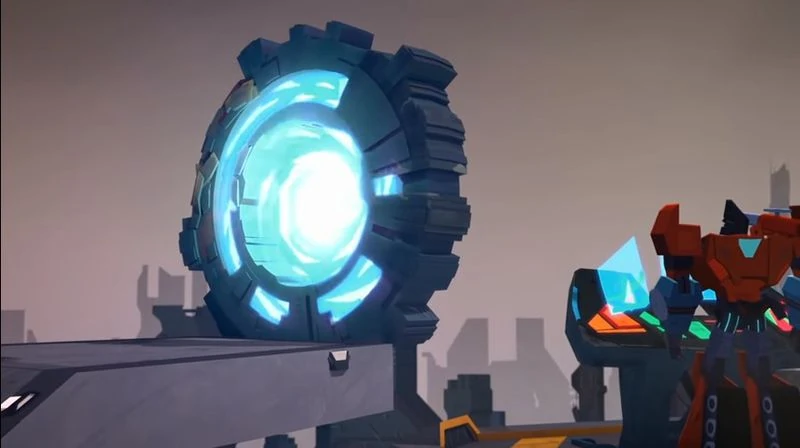
A spacebridge portal, as seen in Transformers: Cyberverse
As robotic beings who predate the earliest humans by millions of years, it should come as no surprise that Cybertronian technology far outstrips the sum total of humanity's scientific development. Exotic technologies that defy our conventional understanding of physics are treated as commonplace; Cybertronian starships, and even those Transformers who become starships, for instance, are capable of faster-than-light travel and able to traverse vast distances in a short period of time. Space bridge technology goes even further than that, allowing travelers to instantaneously warp billions of light-years, completely bypassing the need for an interstellar voyage. Artificial intelligences of varying levels of sophistication coexist alongside their sentient creators, and exotic chemical compounds are commonplace in both military and civilian uses.
When it is portrayed at all, academia on Cybertron is very much akin to its Earthen counterparts; Transformers may choose to specialize in one or more scientific disciplines—physics, engineering, and biology being the most common. Perhaps as a result of their biological immortality, scientific progress seems to occur far more slowly for Cybertronians than it does for humanity; outside of minor innovations and development of weapons, Cybertron has been known to have technology largely stagnate for millions of years, whether within or outside of wartime. Indeed, Vector Prime has noted that in certain universes, technology developed more in the few decades following the Transformers' first contact with Earth than it did for millions of years beforehand, implying that humanity's own rapid development could act as a "catalyst" for the Transformers' advancements.
Art
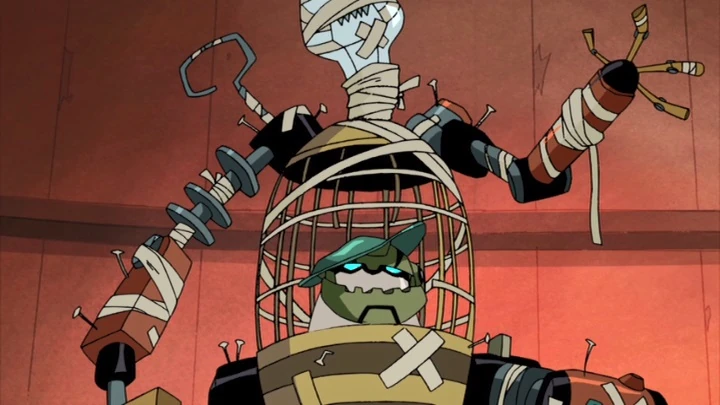

The Transformers have been shown to have a very active musical tradition. The Matrix itself has an archive of 11 million traditional Cybertronian songs. Many Transformers such as Jazz and Blaster have shown great interest in music, and Squawkbox is one prominent example of a Cybertronian musician.
Furthermore, sculpture seems to be one of the primary art forms of Cybertron, with many Transformers dedicated to it. One notable (and gruesome) school of sculpture, practiced by a startling number of Transformers involves making art out of the bodies of other Transformers. The Slogism movement is a part of this school.
Filmmaking is also practiced on Cybertron, though most examples seen are either documentaries or straight-up propaganda. Attempts by Cybertronians have also been made to produce films more inspired by the human art of cinema, but the results tend to be lacking.
Linguistics
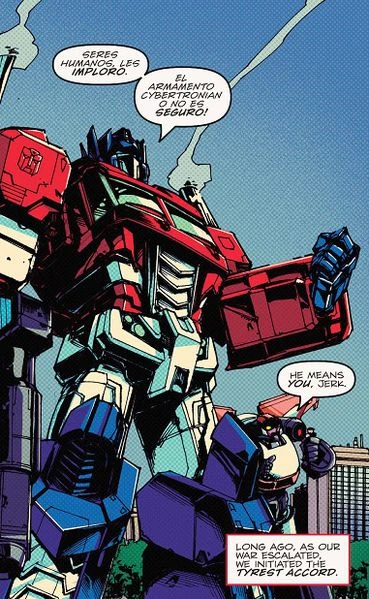

Optimus Prime speaking in Spanish
Nothing if not adaptable, Cybertronians can quickly adapt to life on a new planet by instantaneously learning the local languages, allowing them to fluently and easily communicate with native lifeforms. The process by which this is done so is not always so clear-cut; the 2007 film credited this skill to the Autobots' ability to access the Internet, while an issue of the Marvel Comic suggested that it was a natural ability, albeit one that that required time to unscramble and synthesize the language for Cybertronians. Various Transformers have referred to their names as "code-names," suggesting that their names as humans understand them are not their real names, but merely translated to get a similar idea of their true name across.
It can be safely assumed that stories set exclusively on Cybertron or setting otherwise devoid of humans have "translated" dialogue for the benefits of us, the viewer, though the implication is certainly that these Cybertronians are "really" speaking in their native tongue. What, exactly, spoken Cybertronian language sounds like is something of a mystery; the live-action film series, at least, have established that the native tongue of those Transformers is a collection of garbled electronic noises, its pitch and speed depending on the size of the 'bot in question. Transformers who are unable, or unwilling, to speak may use nonverbal languages, such as chirolinguistics or Cybertronian Sign Language.
Our knowledge of written languages is more concrete; over the years, a variety of Cybertronian calligraphies have surfaced, depending on era and faction—Maximals use a different language than Predacons, and both differ from the languages of Autobots from Decepticon. Out of universe, these "written languages" tend to be rather simple 1-1 cyphers of the English alphabet, and as a result of this, many stories have taken the opportunity to sneak in various Easter eggs in the form of hidden messages, for the benefit of those ultra-geeky fans.
Medicine
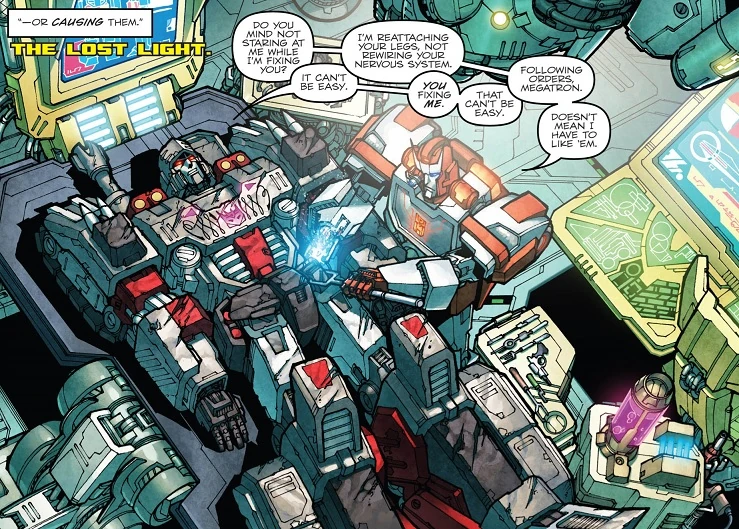

Cybertronians are an adaptable and robust race, able to survive even grievous injuries, but seriously injured or ailing Transformers may turn to members of Cybertron's medical community for assistance. The robotic nature of their bodies means that a Cybertronian "doctor" is a combination mechanic, roboticist, and physician, who must be able to accurately assess and repair damage to their patient's mechanical form. Individual specializations exist, such as "blacksmiths"—essentially, a Cybertronian obstetrician—but most in-fiction Transformer medicine comes in the form of on-the-ground battlefield repairs, designed to get wounded soldiers back on their feet and into the fight as quickly as possible.
Different educational institutions on Cybertron have been known to offer courses in medicine, and the realities of war mean that their services are in generally high demand. Some particularly deranged medics may fall in with the Decepticons or other unsavory sorts, developing exotic and oftentimes gruesome "treatments" to perform on both both friends and foes, or concocting exotic new disease-based bioweapons designed to wreak havoc on their enemies.
Generally, Cybertronian physicians choose to transform into ambulances and other "first responder" vehicles, and even those who don't often sport red-and-white color schemes.
Romance
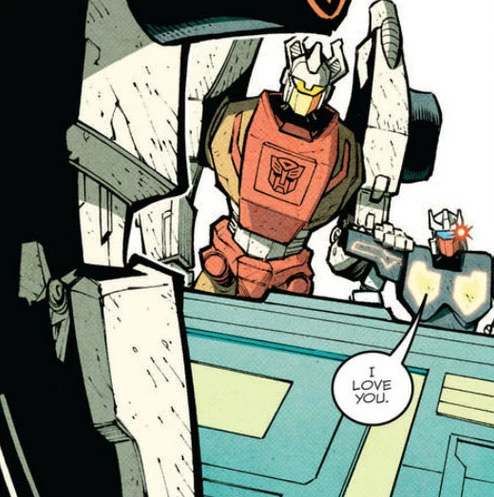

Chromedome with his Conjunx Endura, Rewind
Although their means of propagation tend towards the asexual, the Transformer psyche is not dissimilar enough to a human's that they do not crave the same kinds of long-term social bonds that we do, and though the story of Transformers is primarily one of war, various continuities have established that Cybertronians are also capable of the same kind of romantic affection that humans regularly engage in. This behavior dates back to the earliest days of the franchise; though it was never explicitly spelled out, dialogue in the 1984 cartoon made it abundantly clear that Optimus Prime and Elita One held one another in high regard, with similar implications continuing through the 1986 animated film and its treatment of both the "swashbuckling hero" Springer and the distinctly feminine Arcee. Some instances of romance are depicted as serious, while others are distinctly played for laughs, such as the Predacon Scylla's emphatically one-sided crush on the Maximal Scuba.
In rarer cases, Cybertronians may fall in love with humans or aliens (though their feelings may not always be reciprocated), while particularly clueless Cybertronians may develop an attraction to inanimate objects—see Side Burn and his inexplicable romantic attraction to red sports cars. Other Transformers may consider this behavior strange, but there do not seem to be any explicit taboos against it either.
Though one would assume that—as basically sexless lifeforms—the average Transformer would not display any real kind of preference when it comes to the already vague concept of Transformer gender, most Transformers fiction has largely displayed Transformers in "straight" relationships, with "male" Cybertronians falling in love with "female" Cybertronians and vice versa. Only comparatively recently as this situation begun to change; in 2012, More than Meets the Eye made history by introducing Chromedome and Rewind as the first definitively identified same-sex couple, with many more following in their footsteps. More than Meets the Eye would dub individuals in this kind of relationship as "Conjunx Endurae," the first official name for the concept and the term that would become the standard terminology to describe romantically intertwined Transformers of any gender.
Subgroups
As a mechanical species with a predisposition towards physical reconfiguration, Transformers consist of a number of "subspecies" that can usually be identified based on what kind of alt-modes they have or how many forms they can adopt. These subspecies have been listed below.
- Transformer - The baseline Cybertronian; typically ranging between 20 to 40 feet in height when in robot mode and has a single alt-mode, usually a vehicle that travels by land or air though are capable of adopting a wide variety of shapes.
- Triple Changer - A Transformer that sports a robot mode and two alt-modes.
- Six Changer - A Transformer that is capable of assuming five alt-modes as well as a robot mode.
- Monoformer - A Cybertronian that does not transform at all. This can be due to losing their transformation ability as a result of injury or disease, or by the forceful or willful removal of the transformation cog.
- Action Master - A Cybertronian that is fueled by nucleon as opposed to energon. This fuel source causes a mutation that converts a Transformer's alteration systems into energy storage cells, making the Transformer stronger, but at the cost of their ability to change shape.
- Combiner - A super-robot formed when multiple Cybertronians join together, with each member forming a different part of the gestalt's body.
- Headmaster - A Cybertronian that has binary-bonded with a smaller organic being, the Transformer's head reconfiguring into an exo-suit for the organic partner.
- Targetmaster - A Cybertronian that has binary-bonded with an organic being in a similar method to the Headmaster process, though the organic partner is fused to the Transformer's weapon.
- Powermaster - A Transformer that has binary-bonded to an organic being for the purpose of gaining additional energy.
- Mini-Con - A diminutive subspecies of Transformer that stands at roughly the same size as a human being. They can not only transform into various configurations but can share their energy with larger Transformers through a process known as Powerlixing, granting the host Transformer greater abilities than they would normally have.
- Micromaster - Transformers that are also human-sized, but have been artificially downsized for the purposes of transforming into smaller alt-modes or for energy conservation.
- Pretender - A Transformer capable of imitating the appearance of an organic lifeform, albeit one adorned with hi-tech armour. Even these Transformers are capable of assuming vehicular modes, though many instead adopt beast modes.
- Transmetal - A niche subset of Transformers from the Beast Era. After a quantum surge wave struck Earth during the Beast Wars, a number of Maximals and Predacons had their superstructures mutated by the wave, inverting their organic components to mechanical and granting them additional forms and abilities.
- Technorganic - A Transformer that has undergone a symbiosis of organic and machine components.
- Titan - A Transformer of colossal size, capable of transforming into a mobile fortress or a cityscape.
- Terran - A Transformer that has been "born" on Earth, with a body composed of Earth elements as opposed to the living metals of Cybertron.
Factions
Throughout the Transformers multiverse, Cybertronian society has been divided into various factions as it has inevitably become embroiled in conflict. These factions have been listed below.
- Autobots - This faction has been depicted as the "good guys" of the majority of Transformers stories. They are generally peace-loving, but always willing to take up arms for the sake of their survival or for protection of innocent beings.
- Decepticons - Typically depicted as the villains in most continuities, the Decepticons are violent, militant faction that follow a "might makes right" philosophy, driving them towards war and conquest.
- Maximals - Descendants of the Autobots in the various Beast Wars continuities. They share the same noble values as their Autobot forebears, though they have smaller bodies and adopt pseudo-organic beast modes.
- Predacons - The descendants of the Decepticons in Beast Wars. Driven by resentment towards the Autobots and Maximals, they use cunning and brute force to achieve their goals of power and domination.
- Vehicons - An army of mindless drones commanded by Beast Wars Megatron during his rule of Cybertron.